Greek Script Embroidery Font – Medium: A Designer’s Review for Small Business Branding
First Impressions: Elegant, Handwritten, and Versatile
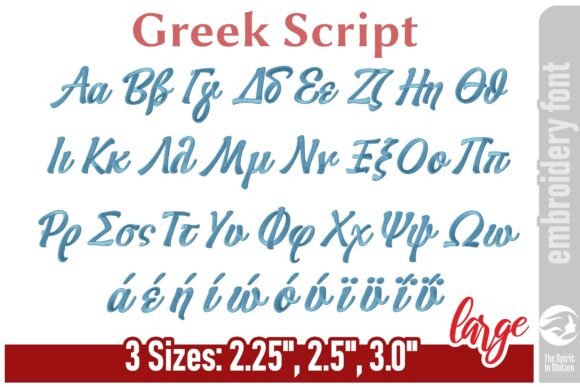
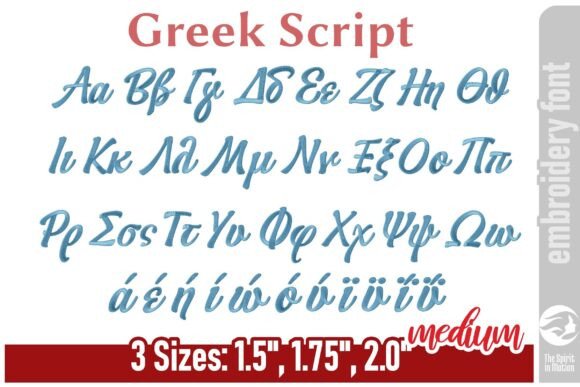
The Greek Script Embroidery Font – Medium immediately strikes a balance between elegance and approachability. As an embroidery designer, I look for fonts that feel both professional and expressive, and this one delivers. Its handwritten aesthetic brings a personal, almost nostalgic charm that could enhance a wide variety of small business merchandise. Whether it's for a boutique, café, or creative studio, the design feels premium without being overly formal.
Based on the product description, it's clear this font is intended for personalized gifts and likely appeals to Etsy sellers and crafters who want to add a touch of authenticity to their items. The mention of full diacritics suggests attention to detail, which is important for businesses needing accurate representation of Greek language or cultural branding.
Real-World Business Use: From Patches to Product Labels
Let’s imagine a local bakery that wants embroidered aprons and tote bags for customers. The Greek Script Embroidery Font – Medium would work beautifully as a stylized logo or tagline stitched onto the chest or sleeve. The script nature of the font adds a soft, welcoming feel—perfect for hospitality or artisanal brands.
- Embroidered patches featuring this font could be used on uniforms, jackets, or even as sew-on labels for handmade products.
- On caps, the font might work best as a small accent—perhaps a business name or slogan—rather than long text due to space constraints.
- For tote bags and aprons, the font’s legibility at a moderate size makes it ideal for custom names or brand tags.
- In product packaging accents, this font could be used in a digital mockup for printed tags or swing tags, especially if the item is sold as a handmade product.
As a designer, I also consider how this font integrates with other design assets. It pairs well with minimalist logos or geometric shapes, creating a balanced visual hierarchy. For school projects or Greek-themed events, it could serve as a standout title or motto in embroidered banners or wall hangings.
Where to Use It Carefully
While the Greek Script Embroidery Font – Medium is elegant, its detailed strokes and curves mean it may not perform well in all situations. Here are some scenarios where caution is advised:
- Small patch sizes – The script may lose clarity when scaled down too much. Always test at actual size before production.
- Cap fronts – Curved surfaces can distort the lettering. Ensure the hoop size and fabric tension accommodate the font’s structure.
- High stitch density – This can cause stiffness, especially on soft fabrics like cotton t-shirts or lightweight tote bags.
- Textured fabric – Rough or uneven materials may obscure the font’s finer details. Test on real fabric samples.
- Dark uniforms – Contrast matters. Light thread colors should be chosen carefully to ensure legibility.
If you're planning to use this machine embroidery design on items that will be washed frequently—like staff uniforms or reusable tote bags—be sure to use a quality stabilizer and test for durability.
Brand Identity and Customer Engagement
Typography plays a critical role in brand identity. The Greek Script Embroidery Font – Medium has the potential to become a signature visual element for a small business. Its unique character can help build customer trust and recognition, especially when used consistently across different touchpoints—packaging, apparel, and promotional items.
For Etsy sellers and craft businesses, this font can elevate the handmade presentation of a product. A personalized tote or apron with elegant script lettering feels more premium and thoughtfully designed, which can lead to better buyer engagement and repeat purchases.
It’s also worth noting that the font’s cultural reference to Greek handwriting can be a strong branding tool for businesses rooted in Mediterranean culture, academic institutions, or Greek-themed merchandise. Used strategically, it enhances visual consistency and tells a story that resonates with your audience.
Practical Notes for Embroidery Designers
Before using the Greek Script Embroidery Font – Medium in a commercial project, here are some steps I recommend:
- Test it in black and white first to evaluate contrast and clarity before choosing thread colors.
- Check if it works at small patch size – some scripts lose legibility when scaled down.
- Review thread color contrast against the fabric to ensure readability.
- Inspect spacing between letters to avoid crowding or gaps that might affect appearance.
- Confirm hoop size compatibility with your embroidery machine and the intended item (e.g., cap frames, small hoops for patches).
- Test on real fabric to see how the design stitches out and how it holds up to wear and washing.
- Use proper stabilizer to prevent puckering, especially on stretchy or delicate materials.
- Create a mockup for client approval – especially useful if the font is part of a larger printable mockup.
- Compare it beside other design assets to ensure it aligns with your brand’s overall aesthetic.
- Confirm commercial licensing before using it in any digital embroidery file or small business merch project.
While the product description mentions that this is a digital embroidery file ideal for personalized gifts, it’s important to verify file formats, stitch count, and licensing terms directly with the provider before large-scale use.
Final Thoughts: A Strong Choice for Thoughtful Branding
The Greek Script Embroidery Font – Medium is more than just a decorative font—it's a commercial embroidery asset that, when used wisely, can significantly enhance your brand’s visual identity. Whether you're creating embroidered patches for a boutique or personalized aprons for a café, this font offers a unique blend of elegance and versatility.
As a designer, I appreciate how it bridges the gap between tradition and modernity, offering a touch of cultural richness while remaining accessible for a variety of small business applications. Just remember to test thoroughly, consider fabric and size limitations, and always align its use with your brand’s voice and values.